
Washington: The Pentagon on Friday said Iran, not the United States or its allies, was responsible for disruptions to commercial shipping in the Strait of Hormuz, one of the world’s most critical energy corridors.
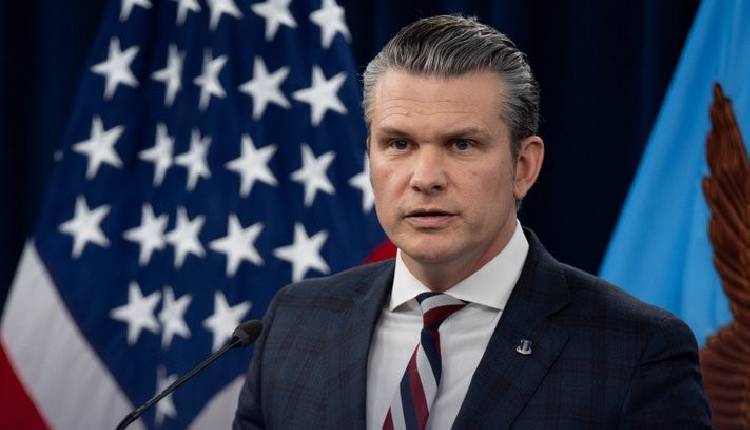
At a Pentagon news conference, U.S. Defence Secretary Pete Hegseth said commercial traffic could move through the waterway but was being threatened by Iranian actions during the ongoing conflict.
“The only thing prohibiting transit in the Straits right now is Iran shooting at shipping,” Hegseth said.
The Strait of Hormuz connects the Persian Gulf with global markets and carries a significant share of the world’s oil shipments, making any disruption closely watched by energy-importing countries, including India.
Chairman of the Joint Chiefs of Staff Gen. Dan Caine said U.S. forces were actively targeting Iranian capabilities used to threaten maritime traffic.
“Our bases or our partners there are continuing to destroy the Iranian Navy,” Caine said, adding that American forces were also attacking Iran’s mine-laying capabilities and naval infrastructure.
“This means going after Iran’s mine-laying capability and destroying their ability to attack commercial vessels,” he said.
Caine said U.S. strikes had already significantly degraded Iranian naval strength during the campaign.
“In less than two weeks, we’ve rendered the Iranian Navy combat ineffective,” he said.
Despite the progress, he cautioned that Iran still retained the ability to threaten shipping.
“Iran still can harm friendly forces and commercial shipping, and our work on this effort continues,” Caine said.
Hegseth said the United States had long anticipated the possibility of Iran attempting to disrupt shipping through the strait.
“For decades, Iran has threatened shipping in the Strait of Hormuz,” he said.
“We have a plan for every option here.”
He added that Washington was coordinating with other government agencies and international partners to ensure energy supplies continued to flow.
“We’re working with our interagency partners… to make sure that energy flows,” Hegseth said.
The strait has long been viewed as a potential flashpoint during any confrontation with Iran, which has repeatedly threatened to block the route during periods of heightened tensions.
The narrow channel is vital to global energy markets, with roughly one-fifth of the world’s oil shipments passing through the waterway each day.
For India, one of the largest importers of Gulf crude, stability in the Strait of Hormuz is particularly important as disruptions can quickly raise energy costs and affect global shipping and insurance markets.
(IANS)