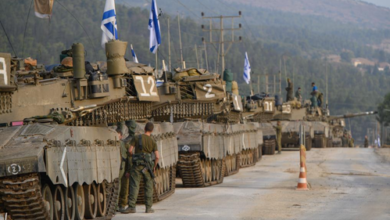

Washington: The global economy is facing a sharp slowdown and rising inflation risks as the war in the Middle East disrupts energy supplies, the International Monetary Fund (IMF) warned on Tuesday, signalling heightened uncertainty for policymakers and markets.
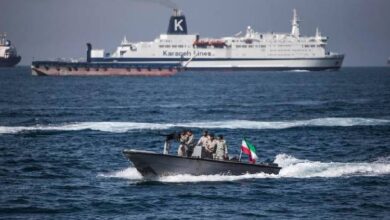
Presenting the latest World Economic Outlook, IMF Chief Economist Pierre-Olivier Gourinchas said the conflict has “halted” earlier growth momentum and raised the risk of a major energy shock, with oil and gas prices surging amid disruptions linked to the closure of the Strait of Hormuz.
“The war in the Middle East has halted this momentum,” he said, adding that “the closing of the Strait of Hormuz and serious damage to critical energy facilities… raised the prospect of a major energy crisis.”
The IMF now projects global growth to slow to 3.1 per cent in 2026, down from its January forecast, while headline inflation is expected to rise to 4.4 per cent.
The report outlines three scenarios. In an adverse scenario, growth could fall to 2.5 per cent and inflation rise to 5.4 per cent. In a severe scenario, prolonged energy disruptions could push global growth down to 2 per cent and inflation above 6 percent.
Gourinchas said risks remain “very elevated,” warning that higher commodity prices are acting as a “textbook negative supply shock,” raising costs, disrupting supply chains, and eroding purchasing power.
Financial conditions are also tightening, with investors moving towards safer assets, strengthening the US dollar and putting pressure on emerging markets. “That appreciation is creating inflation pressures in other countries… and it also is tightening financial conditions,” he noted.
The IMF said the global outlook now hinges on how long the conflict lasts. Gourinchas noted that the world is already drifting away from the baseline scenario. “With every day that passes… we are drifting closer towards the adverse scenario,” he said.
Central banks, he said, should avoid overreacting immediately but remain vigilant. “They can afford to wait and watch for now,” he said, while stressing the need to act if inflation expectations become unanchored.
Fiscal policy space, however, has narrowed significantly. Governments were cautioned against broad subsidies or price caps. “Most countries don’t have that luxury anymore,” Gourinchas said, urging targeted and temporary support for vulnerable groups.
The IMF also warned that the current shock is comparable in scale to the 1970s oil crisis in terms of supply disruption, though the global economy is now less oil-dependent and better equipped with policy tools.
Low-income, energy-importing countries are expected to be hit hardest, while Gulf economies face severe direct damage from the conflict, he said, adding that emerging markets, despite showing resilience in recent years, could see their fiscal constraints tested amid rising debt and borrowing costs.
“With the right policies… the damage can remain limited,” Gourinchas said, calling for a swift end to hostilities and reopening of critical trade routes.
The IMF’s World Economic Outlook is released twice a year, with updates scheduled in July and January, as global conditions continue to evolve.
(IANS)