Indo-Pacific Strategic Theatre In 21st Century: Paparo Stresses Importance Of Allies

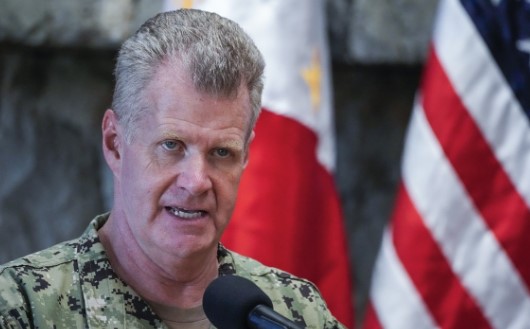
Washington: The Indo-Pacific is “the defining strategic theatre in the 21st century,” Admiral Samuel Paparo, head of US Indo-Pacific Command, has told lawmakers, warning that Washington must sustain deterrence through alliances, forward military presence and technological advantage to counter rising challenges in the region.
During a Congressional hearing this week, Paparo said deterrence in the region depends on sustained operations and coordination with allies, describing it as “our highest duty.”
“We deter with dynamic combat power, conducting operations every day across all domains,” he said, pointing to expanded exercises and deeper military integration with partner nations.
He stressed that alliances remain central to US strategy. “Our allies and partners increase our combat capability and capacity… and strengthen deterrence,” Paparo said, citing growing cooperation across the Indo-Pacific.
Highlighting India’s role, he noted that the military-to-military relationship with New Delhi “is on an upward trajectory” and remains a priority engagement, reflecting Washington’s broader push to deepen ties with key regional partners.
Paparo warned that China’s approach goes beyond conventional military expansion, pointing to tactics such as “information operations,” coercion and legal manoeuvres aimed at reshaping the regional order without direct conflict. “These are all contingencies that we plan very deeply,” he said.
He also underlined the rapid evolution of warfare, saying the US must adapt to emerging technologies and battlefield realities. “We see it every single day… the commoditisation of cheap, distributed, precision kill,” Paparo said, referring to lessons from ongoing conflicts.
The admiral called for a mix of advanced and cost-effective capabilities. “While we need exquisite to take down exquisite things, we need cheap to take out less exquisite things,” he said, emphasising investments in unmanned systems and scalable weapons.
Senior Pentagon official John Noh reinforced the administration’s position, saying the United States seeks to “deter China through strength, not confrontation,” while ensuring no single power dominates the region.
“This is not for the purpose of dominating or humiliating China,” Noh said. “Rather, it is to defend our vital national interests in the Indo-Pacific.”
Paparo also raised concerns over China’s deepening ties with Russia, warning that Beijing provides “90 per cent of the semiconductors that power Russia’s war machine” and a majority of critical industrial tools, calling the connection “deeply concerning.”
In the second half of the hearing, lawmakers focused on broader geopolitical pressures and their impact on US strategy in Asia.
Representative Adam Smith said maintaining alliances is critical to deterrence, but warned that conflicts elsewhere are stretching US resources. “The war in the Middle East is causing enormous problems… in the Indo-Pacific as well,” he said.
He stressed the importance of credibility with partners. “We need to let those folks know that we are there and they can depend on us,” Smith added.
Other lawmakers raised concerns about delays in arms deliveries to Taiwan and the need to accelerate defence production. Paparo agreed on the urgency, saying deliveries should be made “not just on time, but early.”
Despite concerns over resource diversion, Paparo maintained that US forces remain postured to deter aggression, emphasising mobility, logistics and sustained presence as key elements.
(IANS)