Canada’s Army Chief Sees War-Forged Ties With South Korea Grow ‘Stronger’

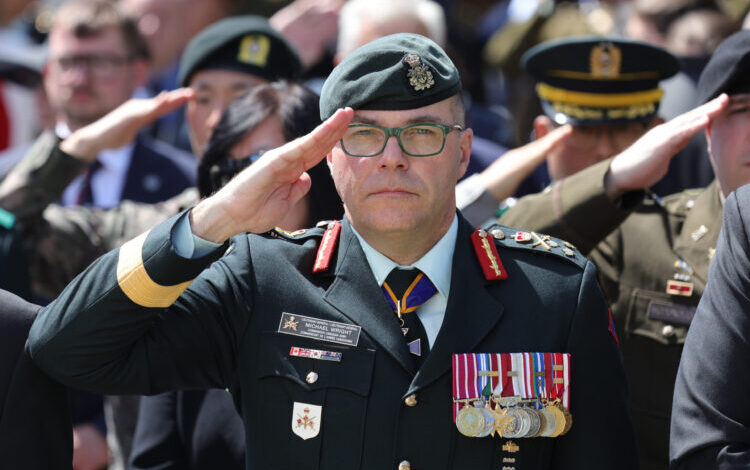
Seoul: Partnership between South Korea and Canada, forged on battlefields of the 1950-53 Korean War, has endured for decades and is growing even “stronger” amid deepening military cooperation, the commander of the Canadian Army has said.
Lt. Gen. Michael Wright, commander of the Canadian Army, made the remarks in an interview with Yonhap News Agency on Friday, as he was visiting South Korea to attend a ceremony commemorating the 75th anniversary of a key Korean War battle in the northern county of Gapyeong.
Some 2,000 troops of the 27th Commonwealth Brigade, comprising soldiers of Britain, Canada, Australia and New Zealand, engaged in three days of fierce combat against Chinese forces in April 1951 at the height of the three-year war.
“For Canada, it’s a reaffirmation of our partnership that started on the battlefields in Korea in 1950 and endures to this day and, if anything, is getting stronger,” Wright said when asked about the significance of the 75th anniversary of the Battle of Gapyeong.
“So I really think that the history that we share is an indicator of what we’ll do together in the future,” he said.
Ahead of the anniversary, troops from the Canadian Princess Patricia’s Canadian Light Infantry, an army unit that fought at the battle in Gapyeong, arrived in South Korea for their first high-tech military drills with the South’s Army.
Over 26,000 Canadians participated in the Korean War, with 516 killed and approximately 1,200 wounded, according to the UN Command (UNC).
South Korea and Canada are seeking to bolster defence cooperation as President Lee Jae Myung and Canadian Prime Minister Mark Carney agreed to deepen their strategic partnership in defence, security and military intelligence sharing during summit talks in Gyeongju last year.
Wright said Canada has been in discussions with South Korea’s defence industry over Ottawa’s project to modernise the army.
“The Canadian Army is in the midst of our largest modernisation of equipment in over 25 years, and we’re looking in accordance with our defence industrial strategy — what we can do to rapidly accelerate bringing new equipment into the Canadian Army,” he said.
On possible areas for arms cooperation, Wright said: “The K9 howitzers, I know, are something that Hanhwa has spoken about. The Redback Infantry Fighting Vehicle is another example,” while noting the Canadian defence ministry and defence investment agency will determine the details.
Hanhwa Aerospace earlier said it proposed an integrated solution binding its K9 self-propelled howitzers, Chunmoo multiple launch rocket system and Redback infantry fighting vehicles in a package deal as part of efforts to win contracts over Canada’s army modernisation project.
Canada’s modernisation strategy centres on generating modern land forces by investing in next-generation capabilities and securing increased sustainment capability, according to a plan outlined by Canada’s defence ministry.
The Canadian Army commander struck a positive note about future military cooperation between Seoul and Ottawa.
“I think the future military cooperation is much stronger,” he said, noting that the recent series of leadership and ministerial-level visits between the two nations shows how they are looking to work together increasingly in such a “fractured world.”
(IANS)