
Washington: The White House is asking other countries to join a US-led international coalition aimed at enabling ships to navigate the Strait of Hormuz, American media has reported.
The so-called “Maritime Freedom Construct” (MFC) was spelt out in an internal State Department cable sent to US embassies on Tuesday, urging US diplomats to press foreign governments into signing up, according to The Wall Street Journal (WSJ) report on Wednesday (local time).
The MFC would be a joint effort between the State Department and US Central Command, according to the cable. The US State Department “will serve as the diplomatic operations hub” while the command “will provide real-time maritime domain awareness” for commercial shipping and coordinate information sharing between partner militaries, said the report.
The new coalition would share information, coordinate diplomatically and enforce sanctions, said the report, citing the cable, which also instructs US officials to ask foreign counterparts whether they would like to be a “diplomatic and/or military partner.”
“Your participation will strengthen our collective ability to restore freedom of navigation and protect the global economy,” the cable reads. “Collective action is essential to demonstrate unified resolve and impose meaningful costs on Iranian obstruction of transit through the Strait.”
“The MFC would be complementary to other security maritime task forces, including the maritime planning effort the UK and France are leading,” the cable reads.
The Strait of Hormuz has become a key sticking point in stalled peace talks between the United States and Iran, leaving the vital chokepoint in limbo as anxiety climbs over spiking global energy prices.
While Iran is targeting vessels that don’t pay transit fees to leave the strait, the US Navy has imposed a sweeping blockade on all ships going to or coming from Iranian ports.
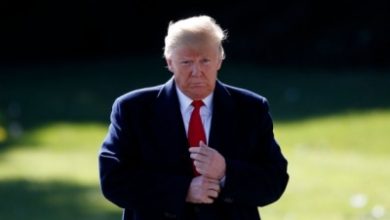
US President Donald Trump said on Wednesday that he will keep Iran under the US naval blockade until Tehran agrees to a deal with Washington, centring its nuclear program.
“The blockade is somewhat more effective than the bombing,” Trump told US online media Axios in a phone interview.
A senior Iranian security source said that on Wednesday, the US naval blockade “will soon be met with practical and unprecedented action.”
Continuing the blockade is prolonging a conflict that has pushed up gas prices, weighed on Trump’s poll numbers and dimmed Republican midterm prospects, the WSJ reported. It has also led to the lowest traffic through the Strait of Hormuz since the United States and Israel launched large-scale strikes on Iran on February 28.
With no clear path forward, some US officials say the eight-week conflict could end without either a nuclear deal or a renewed war.
(IANS)