South Korea, US To Discuss Wartime Operation Control Transfer In Washington Next Week

Seoul: South Korea and the United States will hold their high-level defence talks in Washington next week, Seoul’s defence ministry said Thursday, with the wartime Operational Control (OPCON) transfer and access control of the inter-Korean buffer zone expected to top the agenda.
The biannual Korea-US Integrated Defence Dialogue (KIDD) will take place from Tuesday through Wednesday (US time), the ministry said in a release.
Kim Hong-cheol, Deputy Defence Minister for policy, will lead the talks with John Noh, US Assistant Secretary of war for Indo-Pacific security affairs, Yonhap news agency reported.
“The two sides plan to discuss a broad range of alliance security issues, including the transfer of wartime OPCON and the combined defence posture, to ensure that the South Korea-US alliance develops in a future-oriented and mutually beneficial manner,” the ministry said.
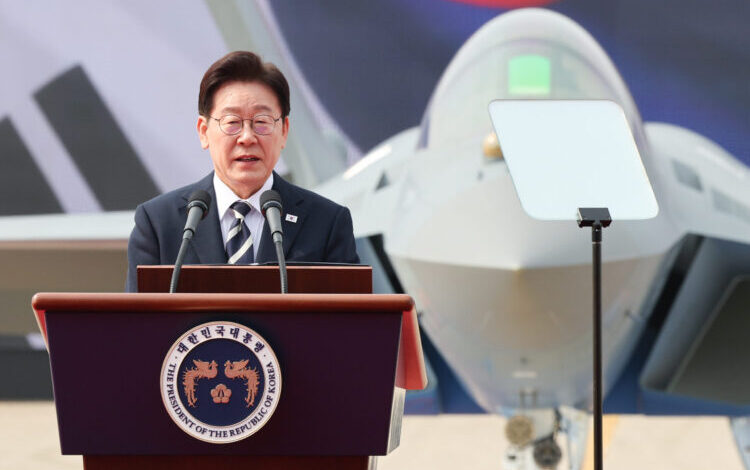
The talks come as Seoul and Washington are working to transfer wartime OPCON to Korea from the US, with the Lee Jae Myung government aiming to retake the command before its five-year term ends in 2030.
Last month, US Forces Korea commander Gen. Xavier Brunson told Congress that the two countries seek to meet conditions required for the transfer no later than the first quarter of 2029.
South Korea handed over operational control of its forces to the US-led UN Command (UNC) during the 1950-53 Korean War. Control was then transferred to the Allies’ Combined Forces Command when it was launched in 1978.
South Korea retook peacetime OPCON in 1994, but wartime operational command still remains in US hands.
The conditions for the transfer include South Korea’s capabilities to lead combined Korea-U.S. forces, its strike and air defence capabilities, and a regional security environment conducive to such a handover.
Also expected to be high on the agenda is the issue of access control over parts of the southern side of the Demilitarised Zone (DMZ), the heavily fortified border separating the two Koreas.
The Lee government seeks to secure control of civilian access to the section of the DMZ stretching 250 kilometres in length and 3 km in width amid efforts to restore ties with North Korea.
Seoul is said to have proposed jointly managing the area currently administered by the UNC under the armistice agreement that ended the Korean War. Bills designed to grant the government control of nonmilitary access to the DMZ are pending in the National Assembly.
The UNC has voiced opposition to these moves and outright objected to the bills, saying they are “completely at odds” with the armistice agreement.
Next week’s talks might also address the Trump administration’s calls for allies to help the US reopen the Strait of Hormuz, that remains choked off since its war against Iran.
The US has proposed an international coalition aimed at ensuring free navigation of the vital waterway, called “Maritime Freedom Construct.”
Seoul has stopped short of committing to military involvement in the war, a stance that has drawn discontent from US President Donald Trump.
The two sides are also expected to discuss bolstering deterrence against North Korea’s evolving nuclear and missile threats, along with the allies’ combined defence posture.
Bilateral cooperation in the areas of naval maintenance, repair and overhaul market is another area likely to be discussed.
Launched in 2011, KIDD is a comprehensive senior-level defence meeting between the allies. The previous KIDD meeting was held in September last year.
(IANS)