Piyush Goyal Credits Amit Shah’s ‘Structured Planning’ For Push Towards Naxal-Free India

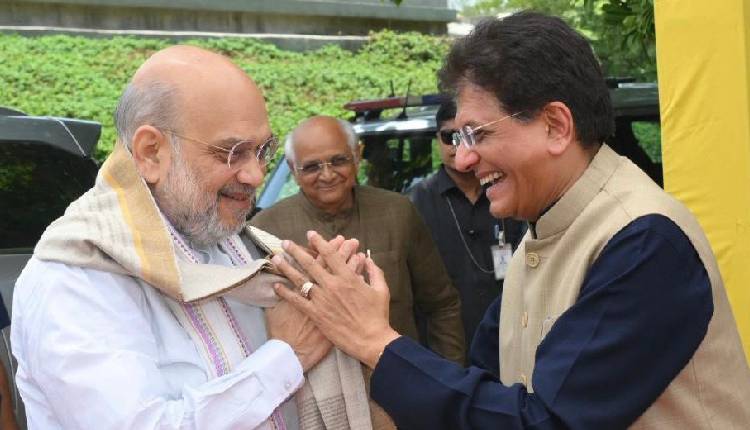
Gandhinagar: Union Commerce and Industry Minister Piyush Goyal on Sunday credited Union Home Minister Amit Shah with leading India’s push towards becoming “Naxal-free”, saying the government’s approach combined meticulous planning, development and structured execution across affected regions.
Addressing the inauguration of the Innovation and Incubation Centre at the National Institute of Design (NID) in Gandhinagar, Goyal described HM Shah as “a very powerful leader and statesman” who had “recently achieved the remarkable feat of making India free from Naxalism”.
The minister said Shah’s governance style reflected “design in thinking” and demonstrated how detailed planning could be applied not only in innovation and industry but also in security and administration.
“Whether it is election campaigns, government schemes or ending Naxalism, if we work with thoughtful design, then the country can progress rapidly,” Goyal said.
Calling Prime Minister Narendra Modi and Shah role models in governance, Goyal said their approach was based on “meticulous planning, detailing, seriousness and depth in every aspect and executing programmes in a structured way”.
Referring to districts once affected by Left-wing extremism, Goyal said the country was witnessing rapid economic and infrastructure changes in regions previously considered inaccessible.
“The whole world is watching how Amit Shah transformed districts once affected by severe Naxalism, where there was no development or infrastructure,” he said.
He specifically referred to developments in Gadchiroli in Maharashtra, saying the district was now witnessing large-scale industrial activity.
“Today, Gadchiroli is witnessing business worth lakhs of crores, steel factories and mining, and people are earning livelihoods,” Goyal said.
The minister said the government had prepared the country to deal with new challenges through infrastructure expansion, digital connectivity and industrial growth.
“India was now focusing on resilient supply chains, sustainability, clean energy and technology-driven manufacturing,” he said.
Goyal also linked the discussion to broader innovation and entrepreneurship goals, saying India’s future depended on combining design thinking, research and entrepreneurship.
“Incubation centres would play a role in helping young innovators convert ideas into commercially viable products,” he noted.
The minister said innovation should ultimately improve the lives of ordinary people and create employment opportunities.
“The real test of innovation is not whether it is advanced technology, but whether it improves people’s lives, gives industries and businesses greater convenience, creates jobs, strengthens the economy and improves productivity and efficiency,” he said.
Goyal added that incubation centres should spread innovation beyond metropolitan cities to Tier-2 and Tier-3 towns, where increasing digital access and mentoring opportunities are allowing young people to build startups and global businesses.
(IANS)