
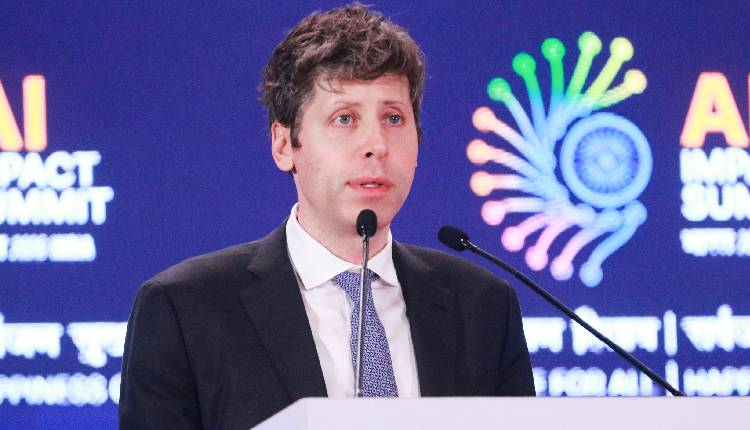
New Delhi: OpenAI CEO Sam Altman on Tuesday said the rapid rise of artificial intelligence is unlikely to trigger the kind of global jobs apocalypse that many feared, admitting that his earlier concerns about massive white-collar job losses may have been overstated.
Speaking at a conference hosted by Commonwealth Bank of Australia in Sydney, Altman said he had initially expected AI to eliminate a far greater number of entry-level white-collar jobs after the launch of ChatGPT in 2022.
However, he acknowledged that the impact on employment has so far been less severe than anticipated.
“I’m delighted to be wrong about this,” Altman said during a conversation with CBA Chief Executive Matt Comyn.
“I thought there would have been more impact on entry-level white-collar jobs being eliminated by now than has actually happened,” he mentioned.
Altman said OpenAI had been “roughly right” about the pace of technological progress in AI, but “pretty wrong” about the social and economic consequences. According to him, early fears around job destruction were driven by what appeared to be a genuine risk at the time.
“People are like ‘oh you could have saved the world a lot of fear mongering and a lot of doom and gloom,’ but at the time I was like ‘I see this is a real risk we should probably talk about it,’ and it still may,” he said.
His remarks come at a time when several global firms, including HSBC, Amazon, Standard Chartered and Commonwealth Bank of Australia, have acknowledged that some roles within their organisations are being replaced or reshaped by AI-driven tools and automation.
Altman, however, said he has increasingly realised that human interaction remains an essential part of many jobs and cannot easily be replicated by machines.
He shared a personal example of experimenting with AI-generated replies for Slack and email messages before eventually returning to responding himself.
“I had it reply to messages, saying ‘this is Sam’s AI,’ and it was an amazing example to me of we really do care about people,” he said.
“We really do care about our interactions with people,” Altman added.
(IANS)