World Environment Day: PM Modi Reaffirms Commitment To Build Cleaner, Greener, Sustainable Planet


New Delhi: Prime Minister Narendra Modi on World Environment Day reaffirmed India’s commitment to building a cleaner, greener, and more sustainable future, guided by the principle of “One Earth, One Family and One Future” and inspired by the spirit of Mission LiFE.
Taking to the social media platform X, the Prime Minister said, “Guided by the principle of ‘One Earth, One Family and One Future’, we will continue working towards a cleaner, greener and more sustainable planet through the spirit of Mission LiFE.”
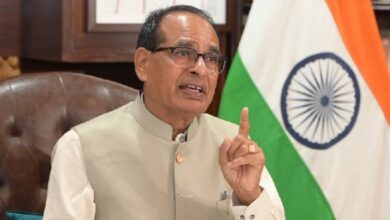
PM Modi also shared a video message highlighting the importance of environmental protection and conservation. He said that the Earth is revered as a mother in India and that its protection, preservation, and development are the responsibility of every generation.
“Our ancestors fulfilled this responsibility, and it is our duty to do the same for future generations,” he said.
Emphasising the significance of Mission LiFE, or Lifestyle for Environment, the Prime Minister said the world needs collective participation to promote environmentally responsible lifestyles.
“We need to move away from consumption-oriented thinking and the ‘use-and-throw’ mindset, which is harmful to the planet. The extent of our consumption should not be determined by our purchasing power, but by our actual needs,” he said.
PM Modi further warned that humanity’s conflict with nature has led to several disasters and cautioned that continued mistakes could create even greater challenges in the future.
“Protecting our planet and preserving the Earth is our collective responsibility,” he added.
Observed annually on June 5, World Environment Day aims to raise awareness about environmental issues and encourage action to safeguard the planet. Led by the United Nations Environment Programme (UNEP), it has become one of the largest global platforms for environmental advocacy and public engagement.
The origin of World Environment Day can be traced back to the United Nations Conference on the Human Environment held in Stockholm, Sweden, in 1972. The conference marked a significant milestone in international environmental governance by bringing ecological concerns to the forefront of global policymaking.
Following the conference, the United Nations officially designated June 5 as World Environment Day, with the first observance taking place in 1973.
The occasion serves as an important reminder of the environmental challenges confronting the world today, including climate change, pollution, biodiversity loss, and the depletion of natural resources. It encourages individuals, communities, businesses, and governments to adopt sustainable practices and contribute to environmental protection.
Over the years, World Environment Day has evolved into a global movement involving more than 150 countries. Activities such as tree-planting campaigns, beach clean-ups, educational programs, and policy initiatives are organised worldwide. Each year, a host country is selected, and a specific theme highlights a pressing environmental issue.
While governments and organisations play a crucial role in environmental conservation, individual efforts are equally important. Simple actions such as reducing waste, conserving water, using public transport, planting trees, and adopting sustainable lifestyles can collectively make a meaningful difference.
(IANS)