Ranchi RSS Office Attack Puts Security Agencies On Alert Over Emerging Threat Pattern

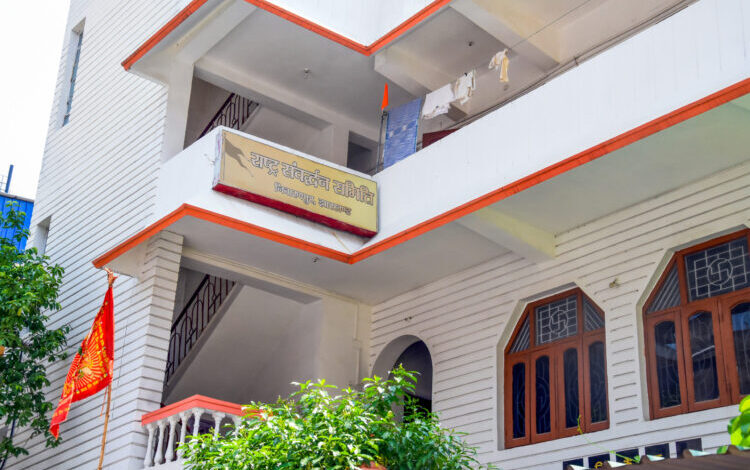
New Delhi: The investigation into the petrol bomb attack on the Rashtriya Swayamsevak Sangh (RSS) office in Ranchi in Jharkhand is continuing, with agencies examining all possible angles, including a potential external link. Intelligence officials believe the incident may reflect a broader shift in tactics by Pakistan’s Inter-Services Intelligence (ISI) and its India-based operatives.
According to Intelligence Bureau officials, the attack comes at a time when several terror and espionage modules have been dismantled across the country, leaving networks under pressure. This, they say, could increase low-intensity attacks in the coming months.
“Low-intensity attacks need very little planning, and hitting important locations with petrol bombs hardly requires any speciality,” an Intelligence Bureau official said.
Officials say that the ISI had earlier planned major attacks through underworld-linked modules. Investigations in recent cases revealed that recruits had allegedly installed solar-powered CCTV cameras at strategic locations to gather intelligence on potential targets. However, the arrests of several operatives and the dismantling of key modules are believed to have disrupted the plots.
In the Ranchi case, investigators suspect the involvement of a small module with possible links to the ISI. One of the accused had reportedly spent six months in Dubai and was jailed there during his stay. During the investigation, agencies found that he had allegedly been in contact with a handler identified as Rana Sahib, who is said to have shared videos demonstrating how petrol bombs could be made.
“The Pakistani spy agency, after having failed in recent months to carry out any major attack, will rely on such tactics to keep the country on the boil,” the official added.
Another intelligence official said the ISI could temporarily defer plans for large-scale attacks while attempting to regroup its disrupted networks. The modules dismantled in recent months were allegedly tasked with carrying out targeted strikes on railway stations and sensitive military installations. However, sustained surveillance and timely action by security agencies prevented those plans from materialising, forcing a reassessment of strategy.
Officials believe the revised approach could involve smaller attacks using unconventional and easily assembled weapons. Petrol bombs, they noted, require little expertise to make, yet can generate a significant psychological impact if directed at high-profile targets.
According to intelligence inputs, the focus of such operations may increasingly shift towards creating fear and panic rather than causing large-scale destruction. Officials also point to the growing pressure on ISI handlers operating across borders, which they say is reflected in the increasing number of arrests and module busts reported in recent months.
The intelligence agencies have advised state police forces to closely monitor petty criminals and financially vulnerable individuals, who could become targets for recruitment by terror handlers. Officials believe such individuals often remain outside the radar of law enforcement agencies because of the absence of criminal records.
They also cautioned against treating incidents such as the Ranchi attack as isolated acts. “If one digs deeper, a clear pattern would emerge,” officials said.
The attack took place on June 16 at around 11.35 p.m. when two petrol bombs were hurled at the RSS office in Ranchi. One was recovered near the main gate, while the other landed on the roof of the building.
Investigators have identified Aman Ansari as the alleged mastermind behind the attack. Another accused, Saif Ansari, who allegedly used the alias Rohit, sustained injuries during a police encounter after reportedly attempting to escape from custody. The investigation remains underway.
(IANS)