Foreign Secretary Vikram Misri’s Tenure Extended By A Year Amid Global Challenges

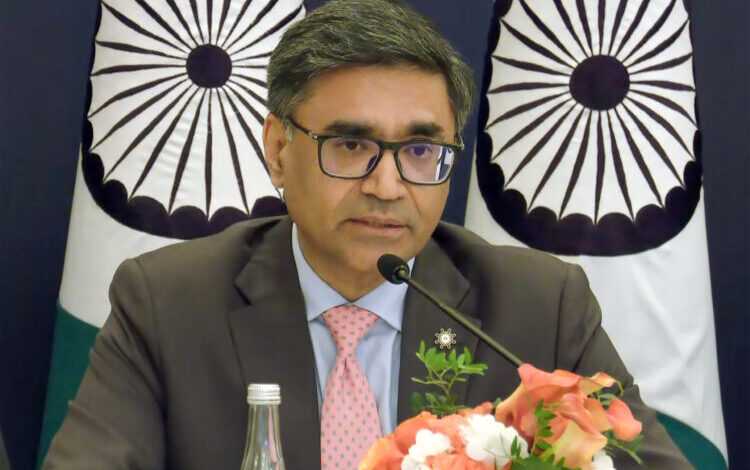
New Delhi: Foreign Secretary Vikram Misri’s tenure has been extended by a year beyond its scheduled end in mid-July, it was announced on Wednesday.
The Appointments Committee of the Cabinet (ACC) has approved the extension of service for the 1989 batch Indian Foreign Service officer for a period of one year beyond his original tenure ending on July 14, 2026 — that is, up to July 14, 2027, or until further orders, whichever is earlier.
The order, issued by the Department of Personnel and Training (DoPT) under the Ministry of Personnel, Public Grievances and Pensions, invokes provisions of Fundamental Rule 56(d).
Misri, a seasoned diplomat with extensive experience in key bilateral and multilateral assignments, has been at the helm of India’s foreign policy apparatus since his appointment as Foreign Secretary in 2024. His tenure has coincided with a period of intense global geopolitical flux, including ongoing tensions in West Asia and Ukraine, evolving dynamics in the Indo-Pacific, India’s assertive role in the Global South, and critical neighbourhood engagements with China, Pakistan, and Bangladesh.
Sources indicate that the extension reflects the government’s confidence in Misri’s leadership and the need for continuity in steering India’s foreign policy during a crucial phase.
Misri, who has served in Pakistan, Europe, and the US and has been the Ambassador to Myanmar and China, has played a pivotal role in strengthening strategic partnerships with the United States, Quad nations, and European countries, while navigating complex economic diplomacy and diaspora welfare issues. His steady hand has been particularly valued in crisis management, such as the evacuation of Indian nationals from conflict zones and advancing key defence and technology collaborations.
The move comes at a time when India is preparing for high-profile diplomatic engagements, including the events as its present tenure of Chair of BRICS, potential G20-related follow-ups, and bilateral summits.
This is not the first extension for senior officials under the current dispensation, which has increasingly relied on experienced hands for critical positions requiring institutional memory and nuanced international navigation. The development is expected to be welcomed by the diplomatic community, as continuity at the top of the foreign service often translates into stronger policy consistency and better outcomes in India’s global outreach.
(IANS)