
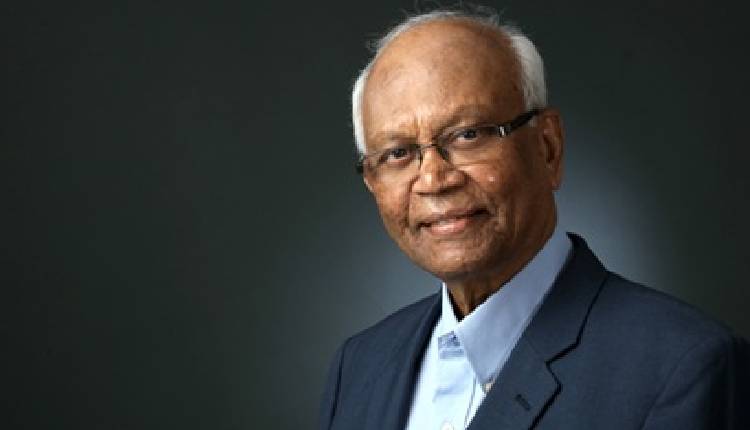
New Delhi: Backing India’s ethanol-blended E20 fuel programme, eminent scientist and Padma Vibhushan awardee Dr Raghunath Anant Mashelkar on Tuesday said ethanol has already proved to be a viable transport fuel globally and can play a key role in strengthening the country’s energy security.
Speaking to IANS, the former Director General of the Council of Scientific and Industrial Research (CSIR) cited Brazil’s decades-long experience with ethanol-powered vehicles as evidence of the fuel’s viability.
“Brazil has been running vehicles on ethanol for 30-40 years. That experience tells us that ethanol is a viable fuel,” said Dr Mashelkar, a chemical engineer and Fellow of the Royal Society.
He said expanding the use of ethanol and other indigenous fuels would help India reduce its dependence on imported crude oil while improving energy self-reliance.
Referring to the recent geopolitical tensions in West Asia, Dr Mashelkar said disruptions to global energy supplies underline the need for India to accelerate the adoption of domestically produced alternative fuels.
“We need self-reliance. We should produce our own fuels,” he said, adding that dependence on imported energy leaves countries vulnerable to global conflicts and supply disruptions.
While expressing strong support for ethanol, Dr Mashelkar said India should simultaneously develop other clean fuel options, including methanol, dimethyl ether, compressed biogas and biomass-based green hydrogen.
“I am not just talking about ethanol. We have to look at all these alternative fuels,” he told IANS.
He also emphasised that biomass should become a key feedstock for India’s clean energy transition.
“The sun is shining, and biomass is produced from solar energy. Biomass should be our main feedstock from which we can produce fuels,” he said.
Dr Mashelkar added that degraded and semi-degraded land could be used to cultivate energy crops such as Napier grass for producing compressed biogas and green hydrogen, without affecting land meant for food production.
(IANS)