
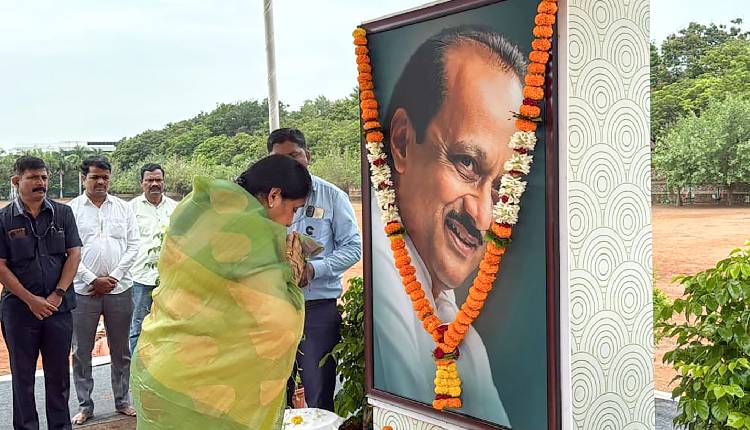
Mumbai: The Nationalist Congress Party (NCP) is weathering a severe, potentially fatal existential storm. Following the tragic demise of its paramount leader and Deputy Chief Minister Ajit Pawar in January 2026, the party’s internal cohesion has completely shattered. The transition of leadership to Ajit Pawar’s widow, Sunetra Pawar, has not brought stability; instead, it has triggered deep systemic fault lines.
Sunetra Pawar’s presidency is legally contested, senior leader Praful Patel has publicly signalled dissent by demanding “corrective steps,” and the rapidly centralising influence of her son, Rajya Sabha MP Parth Pawar, is fueling acute unrest among the rank and file.
Without the towering, politically astute, and resource-rich personality of Ajit Pawar, the NCP risks swift political obsolescence.
Unlike the rival NCP (SP) faction led by patriarch Sharad Pawar, this faction cannot easily leverage a narrative of victimhood or deep-rooted emotional legacy. If the NCP is to survive, it will have to immediately transition from a regime of family decrees to a strategy of institutional stabilisation and collaborative leadership.
The primary challenge to the new guard is structural. A legal notice filed by former National Secretary Sachchidanand Singh has placed a massive question mark over Sunetra Pawar’s election as National President on February 26, 2026.
The core arguments of the legal challenge expose severe procedural vulnerabilities. The notice argues that mandatory constitutional processes — including appointing an independent election authority, issuing proper notifications, and laying out an official election calendar — were entirely skipped.
Singh has served notice to Sunetra Pawar, Praful Patel, and former general secretary Brijmohan Shrivastav seeking a reply within 15 days.
While Patel and State Unit President Sunil Tatkare have publicly dismissed the notice, claiming the election was perfectly legal, a major crisis looms if Singh approaches the Supreme Court.
The apex court has yet to settle the foundational dispute with the NCP(SP) over who the “real” NCP is, meaning further litigation could freeze the party’s operational legitimacy.
Party insiders insist that public denials will not suffice. The party must proactively address these constitutional loopholes.
Behind the scenes, the struggle for control is bitter. Internal communications reveal that immediately after Ajit Pawar’s death, senior leaders attempted to consolidate power under Praful Patel’s role as Working President. Sunetra Pawar retaliated aggressively, writing to the Election Commission of India (ECI) to nullify decisions taken during the transition period.
This friction has already compromised the party’s external bargaining power. The NCP’s inability to reclaim the crucial Finance portfolio (previously held by Ajit Pawar) — despite high-level meetings with Union Home Minister Amit Shah — indicates a sharp decline in their leverage within the ruling coalition.
When Praful Patel publicly acknowledges that “corrective measures” are needed to fill the vacuum left by Ajit Pawar, he is giving voice to seasoned politicians who feel sidelined by the family.
At the heart of the grassroots unrest is the meteoric ascent of Parth Pawar. Since entering the Rajya Sabha, Parth has been acting as the de facto decision-maker on behalf of his mother.
Senior MLAs and ground-level workers deeply resent taking directives from a young leader with a limited electoral track record.
Under Ajit Pawar, legislators enjoyed immediate, decisive access to power. Under the new guard, a severe lack of communication from Sunetra Pawar and Parth’s perceived reluctance to engage directly with the public have alienated the party’s legislative wing.
As a close aide to the late Ajit Pawar notes: “Parth Pawar has to earn his political stripes rather than inheriting them through decree. Instead of acting as an intermediary from closed rooms, he must build mass contact, travel across Maharashtra, and earn the respect of the cadres.”
The NCP’s legislators are highly pragmatic. If the veteran leaders (Patel, Tatkare) and the Pawar family continue to work at cross-purposes, MLAs will inevitably begin migrating to safer political outfits — whether the Shinde faction, BJP, or back to the Sharad Pawar camp — to secure their own futures.
To survive this turbulent transition, the political observers suggest the leadership must implement a two-pronged strategy.
The core committee, comprising veteran leaders, must be empowered to make all major political and legislative decisions.
Appointments must be vetted through this committee rather than issued unilaterally by the family.
Regular meetings of the legislative party must be held. Furthermore, Sunetra Pawar must leverage her position as Deputy Chief Minister to actively resolve constituency-level issues for her MLAs, replicating the hands-on, accessible style that made her late husband Ajit Pawar fiercely popular.
(Sanjay Jog can be contacted at sanjay.j@ians.in)
(IANS)