SC Admits Somnath Bharti’s Plea Challenging BJP MLA Satish Upadhyay’s Election

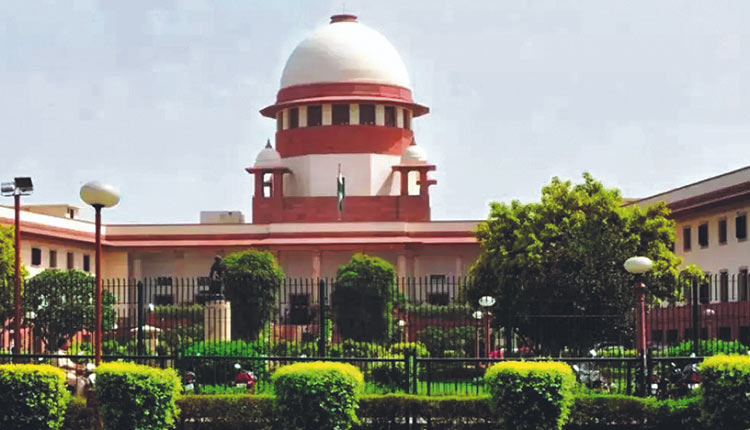
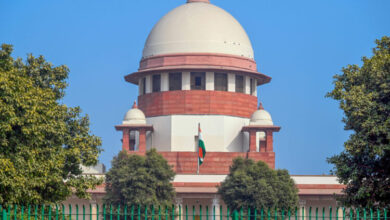
New Delhi: The Supreme Court on Friday agreed to examine a plea filed by Aam Aadmi Party (AAP) leader Somnath Bharti challenging the election of BJP MLA Satish Upadhyay from Delhi’s Malviya Nagar Assembly constituency.
A Bench of Justices Vikram Nath and Sandeep Mehta granted leave and admitted Bharti’s special leave petition (SLP) against the January 17 judgment of the Delhi High Court dismissing his election petition.
Bharti has challenged the High Court’s decision dismissing his election petition on the ground of non-joinder of a necessary party under the provisions of the Representation of the People Act (RPA).
In the February 2025 Delhi Assembly elections, Upadhyay defeated three-time AAP MLA Bharti from the Malviya Nagar constituency by a margin of 2,131 votes, securing 39,564 votes against Bharti’s 37,433.
The election petition filed before the Delhi High Court sought to have Upadhyay’s election declared void, alleging corrupt practices under Sections 123, 127A and 130 of the Representation of the People Act.
Among other allegations, Bharti claimed that Upadhyay had deployed vehicles to ferry voters to polling booths, manipulated the electoral rolls in collusion with election officials, failed to properly disclose election expenditure, and financially supported Congress candidate Jitender Kumar Kochar to split anti-BJP votes and secure an electoral advantage.
However, a single-judge Bench of Justice Jasmeet Singh dismissed the election petition at the threshold, holding that Bharti had failed to implead Kochar as a respondent despite making allegations of corrupt practices against him.
Referring to Sections 82(b) and 86(1) of the Representation of the People Act, the Delhi High Court held that any candidate against whom allegations of corrupt practices are made must necessarily be impleaded as a respondent, and failure to do so attracts mandatory dismissal of the election petition.
Rejecting Bharti’s contention that the defect could be cured by subsequently impleading Kochar or deleting the allegations against him, the High Court said the Representation of the People Act is a self-contained code requiring strict compliance with its procedural requirements.
“The petitioner’s omission to implead Mr Kochar is not a mere technical lapse but an incurable defect,” the judgment had observed, adding that once the statutory period of 45 days for filing an election petition expires, the defect cannot be rectified through amendment.
Holding that the allegations in the election petition squarely attracted Section 82(b) of the Representation of the People Act, the Delhi High Court ruled that non-joinder of the Congress candidate was fatal to the maintainability of the petition and dismissed it along with the pending applications.
Upadhyay’s victory in Malviya Nagar was part of the BJP’s sweeping performance in the 2025 Delhi Assembly elections, in which the party won 48 of the 70 seats, ending the AAP’s decade-long rule in the national capital.
(IANS)