Dharmendra Pradhan’s Social Media Post Underscores Decision As Emotive, Not Under Compulsion

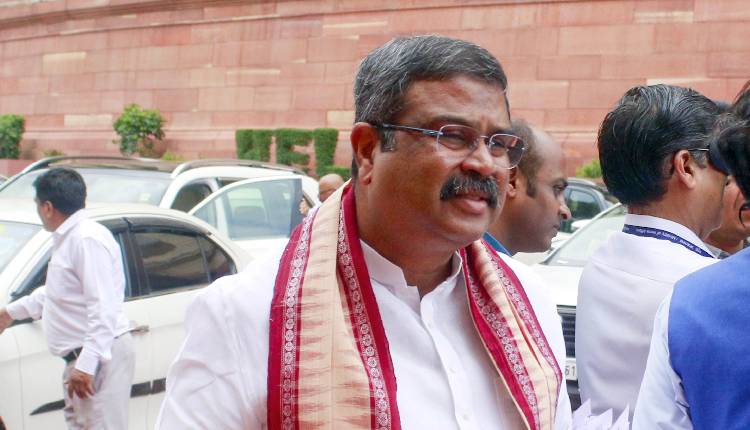
New Delhi: Dharmendra Pradhan’s resignation on Saturday as the Union Education Minister in the face of widespread agitation with protestors claiming his ouster over examination irregularities raises pertinent questions at a time when the Centre was actively involved in making certain reforms.
Will his stepping down by itself upturn all the wrongs in India’s education system, or would he ought to have been tasked to right them?
His social media post underscores that despite claims of political victories and losses in certain quarters, the decision was emotive rather than a step taken under any fear or coercion.
“Considering the situation at Jantar Mantar and across the country, I decided that anti-national forces should not exploit this situation, the unity of the nation must remain intact, not a single student’s future should get entangled in legal complications, and our children should devote their time to studies and career-building. With this in mind, I have submitted my resignation to the Prime Minister (Narendra Modi),” he wrote in his social media post.
At a time when political discourse often descends into personal attacks and divisive rhetoric, Pradhan’s resignation stands out as a rare act of political restraint and moral clarity.
Pradhan made it clear in his official social media post that his decision was not out of compulsion or political defeat, but of a conscious choice to prevent anti-national elements from exploiting the situation.
He urged the nation to remain united, cautioned students against getting entangled in legal proceedings, and reminded them to focus on their studies and careers.
It is a reminder that their primary responsibility is to equip themselves with the knowledge and skills that will allow them to contribute meaningfully to the nation.
This is not to say that students should be apolitical or disengaged from the issues of their time. But there is a difference between constructive participation and being drawn into confrontations that serve no purpose other than to advance the agendas of those who thrive on chaos.
The former builds the nation; the latter weakens it. His statement about preventing “anti-national elements” from gaining an advantage is a reminder that political turbulence can be weaponised by those who seek to weaken the country from within.
Security agencies have already warned about some criminal elements slipping in among protesting students and the possible hand of one, or more foreign hands.
In such moments, the restraint of leaders can be as important as their action.
Perhaps the most striking part of Pradhan’s message is his direct address to students.
In recent years, campuses have increasingly become arenas for political confrontation, sometimes spilling over into legal disputes.
While civic engagement is an important part of education, the danger lies in young people becoming pawns in larger political games.
(IANS)