‘In The Interest Of Road Safety’: SC Mandates 4-Year Third-Party Cover For New Cars, 6 Years For New Two-Wheelers

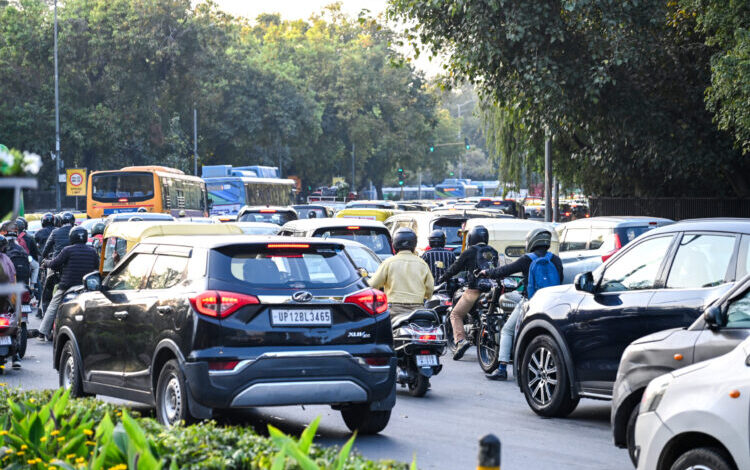
New Delhi: The Supreme Court on Tuesday directed that the mandatory third-party insurance period for new vehicles be extended by one year, ordering that new cars must henceforth be covered for four years and new two-wheelers for six years at the time of purchase, in a bid to improve compliance with the Motor Vehicles Act (MVA) and enhance road safety.
A bench of Justices Sanjay Karol and P.K. Mishra issued the direction while disposing of an appeal filed by National Insurance Company Ltd., saying that despite the earlier mandate requiring three-year third-party insurance for new cars and five-year cover for new two-wheelers, a large number of vehicles continue to ply on roads without valid insurance.
“We notice that despite eight years having passed from the said direction, a large number of vehicles remain uninsured. While the IRDA and GIC have recommended that this period not be enhanced, we are of the view that it is in the interest of road safety that the period be enhanced by one year,” the Justice Karol-led Bench said.
“Therefore, it is directed that henceforth, third-party insurance for four years for new cars and six years for new two-wheelers be required to be purchased. IRDA to immediately issue necessary directions,” it added.
The bench was dealing with larger issues concerning non-compliance with Section 146 of the Motor Vehicles Act, which mandates third-party insurance for all vehicles, and the need for a uniform motor vehicle insurance policy structure covering occupants in addition to third-party risks.
In its order, the apex court recorded that nearly 56 per cent of vehicles plying on Indian roads remain uninsured, defeating the very object of compulsory insurance under the MVA.
“It is shocking to learn that nearly 56 per cent of vehicles plying on Indian roads remain uninsured,” the judgment said, adding that victims of road accidents and their families are often left to engage in prolonged litigation to secure compensation.
During the proceedings, the IRDAI and the General Insurance Council had suggested that extending the tenure of mandatory insurance would not serve the larger public interest, contending that longer-tenure policies would increase premiums and had not significantly reduced the number of uninsured vehicles.
Disagreeing with that recommendation, the Supreme Court held that extending the insurance period was warranted in the larger interest of road safety.
In a significant direction, the apex court approved a four-layer insurance structure for private vehicles comprising a mandatory third-party policy, optional legal liability cover for occupants or pillion riders, optional personal accident cover for the owner-driver and passengers, and optional own-damage cover.
It directed that every customer purchasing motor insurance, whether offline or online, be provided with a mandatory “customer option form” enabling them to opt for additional covers through a checkbox mechanism.
The Justice Karol-led Bench also directed the IRDAI to formulate uniform policy wordings for optional covers and make it mandatory for insurers to provide a consumer-friendly information sheet clearly explaining the four-layer structure and clearly distinguishing between mandatory and optional coverage.
To curb the menace of uninsured vehicles, the Supreme Court directed that Automatic Number Plate Recognition (ANPR) cameras be integrated with the Insurance Information Bureau and VAHAN database to automatically detect uninsured vehicles and issue e-challans.
It further ordered that state police be equipped with handheld devices or mobile applications linked to insurance databases to verify insurance status in real time and enforce compliance on the ground. The apex court also asked the IRDAI and the Ministry of Road Transport and Highways to evolve pilot projects for enabling citizens to verify the insurance status of vehicles and explore linking fuel supply at petrol pumps with valid insurance status to improve compliance with the statutory mandate.
Observing that technology-driven enforcement has become the need of the hour, the Justice Karol-led Bench said existing offline mechanisms must be integrated with digital systems to ensure effective implementation of mandatory insurance provisions.
On the facts of the case, the Supreme Court dismissed National Insurance Company Ltd.’s appeal against a Telangana High Court judgment awarding compensation to the legal heirs of a deceased vehicle owner, holding that a comprehensive insurance policy covered the owner travelling in his own vehicle as an occupant.
It held that courts dealing with motor accident claims should not adopt a hyper-technical approach and found no reason to interfere with the High Court’s conclusion that the insurer was liable under a comprehensive policy.
The Supreme Court directed all stakeholders to comply with its directions and file affidavits by August 14. The matter has been listed on August 18 for consideration of compliance affidavits.
(IANS)