Centre Moves Mines And Minerals (Development And Regulation) Amendment Bill In Lok Sabha

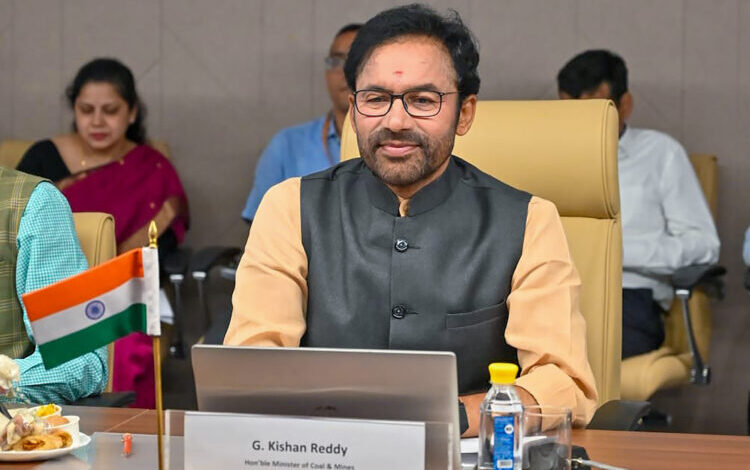
New Delhi: The Centre introduced Mines and Minerals (Development and Regulation) Amendment Bill, 2026 in the Lok Sabha on Monday, seeking to restrict state governments from imposing taxes, cess or other levies on mineral rights, while bringing the regulation of certain mineral-bearing lands under its control.
The Bill, introduced by Coal and Mines Minister G Kishan Reddy, seeks to amend the Mines and Minerals (Development and Regulation) Act to provide “certainty, stability and predictability” to the sector with greater uniformity in the fiscal treatment of minerals across states.
The absence of reasonable limits on taxes imposed by states on mineral rights and mineral-bearing lands has created uncertainty in the mining sector, the minister stated.
According to the new Bill, “no tax, cess or such other levy (by whatever name called) shall be imposed by the state government on mineral rights”.
The Bill also proposes to enable the Centre to take under its control the regulation of mineral-bearing lands having mineral contents in accordance with the parameters prescribed under the MMDRAC.
“This is in addition to the existing provision which declares the Union’s control over the regulation of mines and the development of minerals,” according to the Bill’s Statement of Objects and Reasons.
The restriction proposed in the bill would cover mineral-bearing lands based on parameters such as mineral quantity, mineral value or royalty, except where such impositions are made in accordance with conditions or restrictions prescribed by the central government.
The Bill proposes inserting a new section in the MMDR Act to give effect to these provisions.
It also seeks to invalidate any such tax, cess or levy that had not been deposited with or recovered by a state government before the commencement of the proposed MMDR (Amendment Act), 2026.
“However, any such tax, cess or other levy on mineral rights or on mineral-bearing lands, already deposited with the state government or recovered by it before such commencement, shall not be liable to be refunded,” the Bill states.
The government has further stated that that significant differences in mineral-related taxes and levies across states could distort supply chains and raise costs for industries dependent on domestic mineral resources.
Reddy said regional disparities in fiscal impositions on minerals could affect public interest, while steep or unbalanced taxes could encourage industries to bypass local supply lines. This could result in inefficient market development, higher transportation costs and increased pollution, he added.
“There is also a risk of an increase in imports of minerals despite having sufficient local mineral resources as domestic mineral supply becomes expensive,” Reddy said.
Besides, any retrospective imposition of taxes would cause legal uncertainty and erode investors’ trust, the minister added.
(IANS)