PM Modi, President Xi Agree On Need To Address Trade Imbalance, Supply Chain Issues

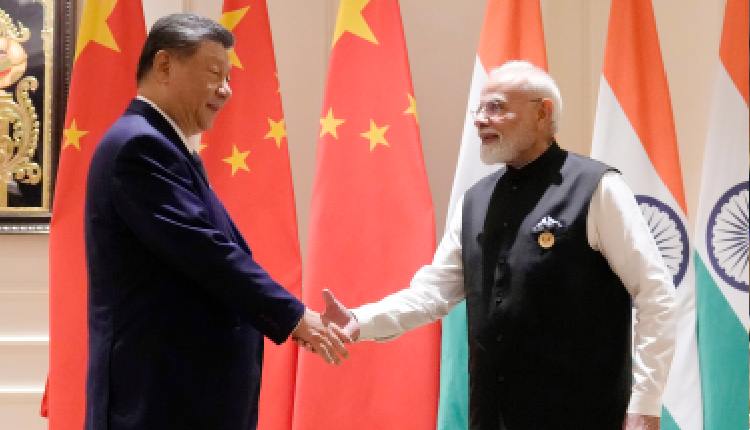
New Delhi: Indian Prime Minister Narendra Modi and Chinese President Xi Jinping, at their meeting here on Saturday, underlined the need to address the concerns of the two countries on the structural trade imbalance and supply chain issues, and facilitation of meaningful and predictable market access, the Ministry of External Affairs (MEA) said.
“The two leaders took note of the progress in people-to-people ties and underscored the need to further promote cultural exchanges, business linkages, and greater mobility between the two countries. On economic and trade relations, they underlined the need to address each other’s concerns, including structural trade imbalance and supply chain issues, and facilitation of meaningful and predictable market access,” the MEA statement said.
The two leaders held bilateral talks on the sidelines of the ongoing BRICS Summit 2026, marking President Xi’s first visit to India in nearly seven years and the third consecutive year in which the two leaders have met, following their meetings in Kazan and Tianjin.
“China-India relations have developed, with both sides keeping in mind the long-term development of bilateral relations from a strategic perspective,” President Xi said during his meeting with PM Modi.
The Chinese leader said that although China and India are different, the two countries have been able to “support and help each other to achieve common development”.
Prime Minister Modi thanked China for its support during India’s BRICS chairship.
“I express my gratitude for the support and cooperation received from China during India’s BRICS chairmanship. We now have the opportunity to discuss bilateral cooperation,” PM Modi said.
India’s trade deficit with China has been increasing steadily in recent years and shot up to $112.16 billion in 2025-26, from $99.21 billion in 2024-25, which has raised the issue of correcting the imbalance so that the two-way trade is sustainable.
India’s exports to China rose 36.62 per cent to $19.47 billion in 2025-26 from $14.25 billion a year earlier. However, imports also increased 16.03 per cent to $131.63 billion from $113.46 billion, which led to a widening of the trade deficit.
India’s merchandise trade with China increased 18.31 per cent in 2025-26 to $151.10 billion. China has also overtaken the US as India’s largest trading partner.
However, the trade imbalance is not simply an issue of consumer goods flowing into India. A large proportion of India’s imports from China consist of essential industrial inputs, components and capital goods used by Indian manufacturers to produce goods and create jobs.
Four key sectors — electronics, machinery, computers, and organic chemicals — account for roughly 66 per cent of these imports. China supplies roughly 43 per cent of India’s electronics imports and 40 per cent of machinery and computer imports, making these core inputs vital to domestic manufacturing rather than discretionary consumer purchases, according to a GTRI report.
India also imports over 40 per cent of six key critical minerals from China, exposing major vulnerabilities in its renewable energy, electric vehicle (EV), and defence supply chains. In fact, any withholding of these exports to India by China results in supply chain disruptions.
The GTRI report highlights that this structural imbalance leaves Indian clean energy, electronics, and pharmaceutical sectors exposed to supply chain disruptions or restrictions on critical raw materials.
China, on its part, will be looking for an easing of investment rules from India to enable its companies to invest in the fast-growing Indian market.
(IANS)