
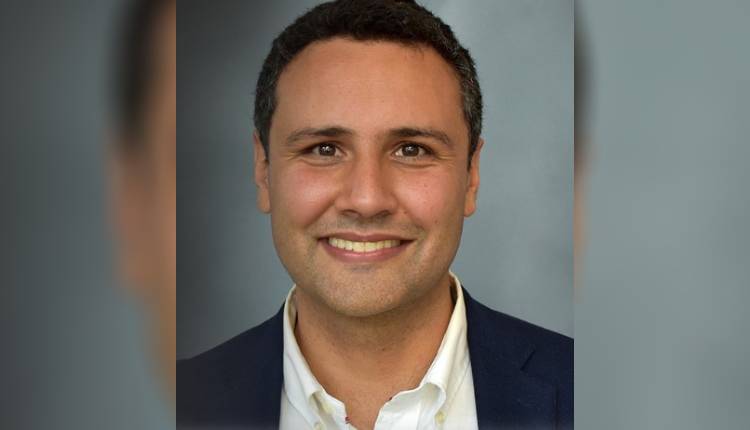
Washington: Nuclear power and natural gas could anchor the next phase of India-US energy cooperation, as both countries look to cut costs, diversify supply chains and strengthen long-term energy security, according to a US-based expert.
“There are plenty of opportunities right now,” said Dinsha Mistree, from the Hoover Institution of the prestigious Stanford University, pointing to nuclear energy as “very critical” for future collaboration between India and the United States.
He noted that the landmark 2008 civil nuclear agreement created the framework for cooperation but “was never fully realized because of various liability laws that were passed in India shortly after.” With recent legislative changes, he said, “there’s now a lot of opportunity for US and India to work very closely together on nuclear.”
Mistree said the US calculus has evolved. “Another important element… is that the US is also in need of building out its own energy project,” he said, adding that nuclear power enjoys broad bipartisan support in Washington. He identified cost as the biggest constraint and suggested India could play a crucial role. “India produces nuclear component parts… It could dramatically reduce the costs compared to what we could make in the US or even what we could buy in other countries.”
At the same time, he cautioned that momentum is still tentative. “It’s still very early days… I see a lot of industry players waiting and watching to see what will emerge,” he said, adding that Indian firms have yet to “make the case fully enough that the US will be a promising market for them to supply to.”
On natural gas, Mistree said bilateral trade is set to grow further. “I think it’s going to be even more. I would hope it would be even more,” he said, noting that the US is “one of the world’s biggest producers.”
He pointed to structural bottlenecks in India, including “taxation and distribution,” but said these can be addressed through policy adjustments. Changes to the tax regime, including potential GST reforms, could “make gas more affordable,” he said, making India “a much more attractive market” for US suppliers.
He stressed that diversification is now essential. “If you’re relying on one or two countries… the right answer for India is clearly to diversify its supply chain,” he said, adding that including the US is “not just a nice to have… it’s a necessity.”
Mistree also highlighted environmental gains from gas. “Gas is one of the reasons why in the US we have clean air,” he said, referring to the shift from coal. He added that gas complements renewable energy. “With gas, it’s a switch. You can turn it on, you can turn it off… it actually also complements really well the existing renewable energy build out that India has been doing.”
Reflecting on recent geopolitical disruptions, he described the current moment as a turning point for India. “This is India’s first big real energy crisis,” he said, urging policymakers to adopt a more structured approach. “Think about energy security in a more substantial way, have an energy security strategy, diversify partnerships, look for new resources.”
He added that US experience could be instructive. “American policy makers have been thinking about energy security now for decades… we have more energy than we’ve really ever had before,” he said, noting a “natural fit” for cooperation between the two countries.
Beyond energy, Mistree said US academic and policy institutions are beginning to pay more attention to India’s rise, though gaps remain. At Stanford, he said India “hasn’t gotten the same level of attention” as China, calling it “a real tragedy.” However, he noted that “farsighted leaders… are very bullish towards India” and want India-US ties “at the centerpiece” of long-term American strategy.
On the Indian American community, Mistree described its trajectory as “very positive,” noting that Indians are “the richest national origin group in the United States.” He attributed this to integration and shared values. “It’s not one of them, it’s one of us,” he said.
But he warned that success brings new challenges. “With success… comes some level of jealousy,” he said, adding that perceptions of Indian Americans could influence how India itself is viewed in parts of the US.
He flagged emerging concerns across the political spectrum. “This is increasingly and concerningly a bipartisan problem,” he said, pointing to instances of policy pushback and negative sentiment.
Mistree underscored the importance of Indian talent to the US innovation ecosystem. “When you think about our America’s STEM and innovation pipeline… we want the best brains… to continue to come here,” he said, warning that any sense of exclusion could have long-term consequences.
He also highlighted a growing reverse linkage. “There are about a million Americans… who live in India,” he said, many of them children of H-1B visa holders, adding that this demographic could shape bilateral ties in the years ahead.
On political participation, he said Indian Americans are becoming more assertive. “Indians are more assertive… Indians aren’t going to be wallflowers in a discussion,” he said, linking this to rising representation in US public life and elections.
India is the world’s third-largest energy consumer and has been expanding its energy mix to balance growth with sustainability. The US has emerged as a major exporter of liquefied natural gas and continues to invest in next-generation nuclear technologies.
(IANS)