Adani Green Energy Expands Battery Storage Capacity To 6.63 GWh In Just 14 Months

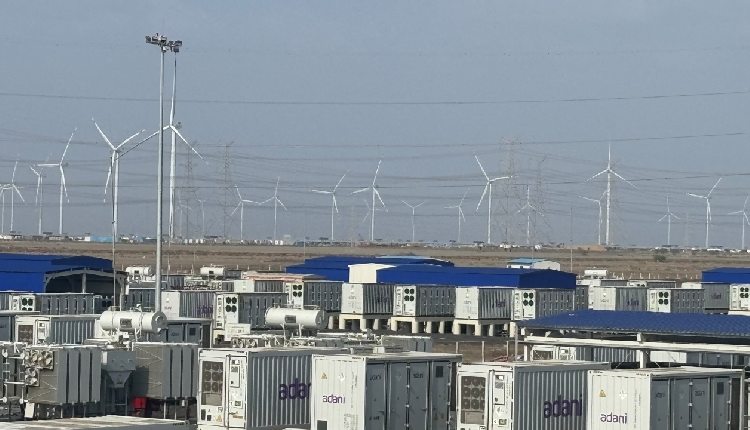
Ahmedabad: Adani Green Energy Ltd (AGEL) on Thursday said it has expanded its operational Battery Energy Storage System (BESS) capacity to 6.63 gigawatt-hours (GWh) at Khavda, Gujarat, from 3.55 GWh in June 2026.
India’s largest renewable energy company now accounts for more than 50 per cent of the country’s operational BESS capacity of about 12.6 GWh.
“Reaching 6.63 GWh of operational battery storage in just 14 months is a significant milestone for AGEL and India’s clean energy transition. At this scale, storage can make renewable power firmer, more reliable and dispatchable when the grid needs it,” said Sagar Adani, Executive Director, Adani Green Energy.
“As India’s power demand grows, we will continue to scale energy storage solutions, both battery and pumped storage, to support a more resilient, lower-carbon grid,” he noted.
The 6.63 GWh BESS can store enough clean energy to power around two million homes a day, and support peak electricity demand of cities like Nagpur, Patna or Vizag for several hours.
This BESS capacity at Khavda is equivalent to battery storage capacity of more than 150,000 mid-sized EVs and can store enough energy daily to meet almost twice the Delhi Metro’s estimated daily electricity requirement, underscoring the unprecedented scale of the installation.
The scale-up to 6.63 GWh strengthens the integration of renewable energy into the grid by enabling clean power to be stored and dispatched when required, said the company.
This milestone also consolidates Khavda’s position as the world’s largest operational battery energy storage installation at a single location.
The BESS is integrated with AGEL’s renewable energy (RE) development at Khavda, where the company is developing a 30 GW RE plant across 538 square kms of barren land.
The BESS uses lithium-ion battery technology, integrated with an Energy Management Systems (EMS) and automated telemetry to manage charging and discharging, optimise system performance and support grid services. Battery storage can improve grid stability, manage peak demand, reduce energy curtailment, and enable renewable power to be delivered when required.
AGEL said it is on track to add over 10 GWh of BESS capacity in FY 2026-27 and is targeting 50 GWh of storage capacity over the next 5 years.
(IANS)