
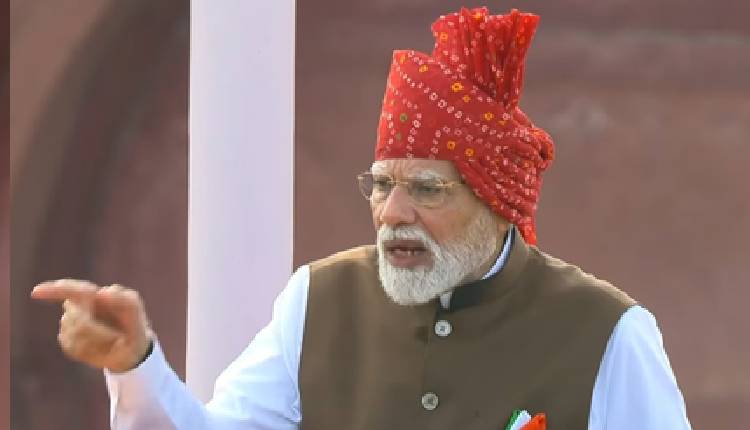
New Delhi: From the historic ramparts of the Red Fort on Independence Day, Prime Minister Narendra Modi declared that India has succeeded in significantly weakening armed Naxalism, but cautioned that a more subtle challenge — what he termed “dimagi Naxalism” — continues to seek opportunities to foment violence and disorder, which needs to be identified and isolated.
Recalling the situation when the BJP-led government assumed office in 2014, the Prime Minister said Naxalism had once “drenched the earth in blood.”
He asserted that the government had fulfilled its pledge to free the country from Naxal violence, noting that Maoist insurgents no longer possess the strength to sustain themselves in the regions that were once hotbeds of armed conflict.
Areas that earlier echoed with Naxalite gunfire and bore bloodstains, he said, now fly the “Tricolour of development, trust and effort.”
Yet, the sharper edge of his message was directed at an ideological strain he alleged still persists.
PM Modi claimed that for years, individuals with a Maoist mindset had occupied influential spaces within the corridors of power, including as advisors in government committees, and had shaped policies accordingly.
While the armed Naxals operating in forests had been largely eliminated, he warned that ideological Naxalism remains active and is “looking for an opportunity” to dig pathways of violence and anarchy.
Calling for decisive action, the Prime Minister urged that such ideological Naxals be identified and isolated.
He linked this warning to the future of the country’s youth, stressing the need to keep young Indians firmly connected to the mainstream path of nation-building and the larger goal of transforming India into a developed nation.
The remarks signal a broadening of the official narrative on Naxalism—from a focus on armed insurgency in central and eastern India to a wider concern about what the Prime Minister Modi described as an intellectual and ideological ecosystem capable of influencing institutions and public policy.
IANS