Bill To Increase Strength Of SC Judges Passed In LS, House Adjourned For The Day

New Delhi: The Supreme Court (Number of Judges) Amendment Ordinance, 2026, was passed in the Lok Sabha through voice vote on Monday.
The House resumed its proceedings after a brief adjournment at noon, even as noisy protests by the Opposition members continued to disrupt parliamentary business.
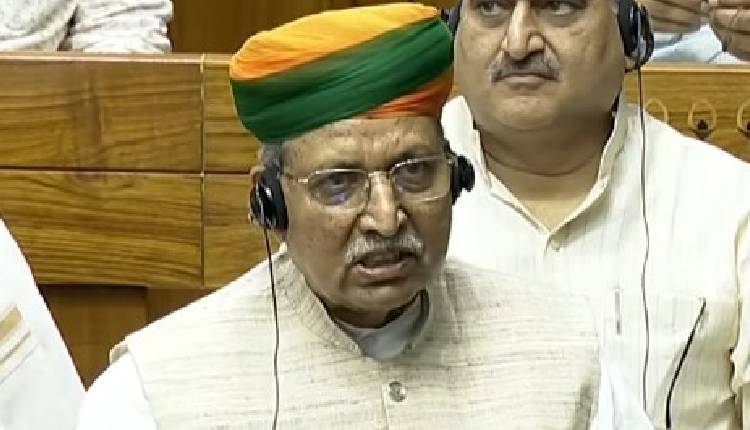
Union Law and Justice Minister Arjun Ram Meghwal tabled the legislation in the House amid loud sloganeering from Opposition MPs, who continued to demand answers from Union Home Minister Amit Shah over the police action during the Jantar Mantar protests.
Despite repeated appeals by Krishna Prasad Tenneti, who was presiding over the proceedings, asking members to maintain order and allow the House to function, the protests continued. The Bill was however passed by a voice vote.
When the disruptions showed no signs of easing, the Chair eventually adjourned the Lok Sabha for the remainder of the day.
The Supreme Court (Number of Judges) Amendment Ordinance, 2026, seeks to replace the ordinance promulgated, earlier this year, to enhance the sanctioned strength of judges in the apex court in view of the growing pendency of cases and the increasing workload before the judiciary.
Under the proposed legislation, the sanctioned strength of judges in the Supreme Court would be increased from 33 to 37, excluding the Chief Justice of India, thereby taking the total strength of the court from 34 to 38 judges.
The Bill seeks to replace the Supreme Court (Number of Judges) Amendment Ordinance, 2026, which was promulgated in May.
Meanwhile, legislative business continued earlier in the day before repeated disruptions overshadowed proceedings.
Union Finance Minister Nirmala Sitharaman introduced the Bankers’ Books Evidence Bill, 2026, which seeks to modernise the legal framework governing evidence relating to bankers’ books by aligning it with contemporary digital banking practices. The proposed legislation also seeks to address matters connected with or incidental to the evolving digital financial ecosystem.
In another key legislative development, Union Minister of State (Independent Charge) for the Ministry of Statistics and Programme Implementation, Rao Inderjit Singh, introduced the Indian Statistical Institute Bill in the House.
The proposed legislation has already drawn strong resistance from sections of the academic community as well as students of the Indian Statistical Institute (ISI).
(IANS)