Delhi HC Directs Daily Medical Monitoring Of Sonam Wangchuk During Fast-Unto-Death

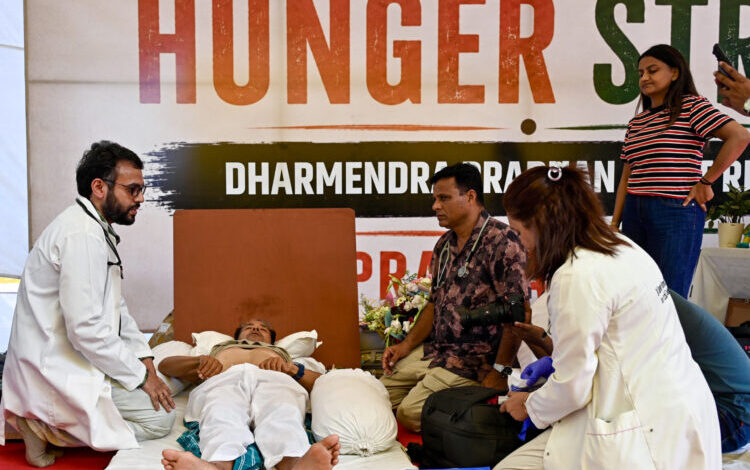
New Delhi: As educationist and climate activist Sonam Wangchuk’s fast-unto-death entered its 19th day, the Delhi High Court on Thursday directed the Centre and the Delhi government to ensure daily clinical monitoring of his medical condition and undertake all necessary medical intervention to address any deterioration in his health.
A Division Bench of Chief Justice Devendra Kumar Upadhyaya and Justice Tejas Karia passed the direction while disposing of a Public Interest Litigation (PIL) seeking urgent medical intervention for Wangchuk, who has been on an indefinite hunger strike at Jantar Mantar.
Solicitor General Tushar Mehta, appearing for the Centre and the Delhi government, submitted that Wangchuk’s health is already being monitored regularly by government doctors and medical experts.
“The health condition of Wangchuk shall be regularly monitored on a daily basis by government doctors. Depending on the opinion of the doctors, whatever medical intervention is needed to check the deteriorating health condition of Wangchuk shall also be taken,” the SG Mehta told the Delhi High Court on instructions.
Recording the assurance, the CJ Upadhyaya-led Bench observed: “Life of any citizen is precious and all efforts ought to be made by the government authorities to save the same.”
During the hearing, the Delhi High Court orally remarked that it wanted Wangchuk to be examined regularly by government doctors and that any medication required on the basis of medical opinion should be administered.
The PIL, filed by advocate Rakesh Kumar Saini, sought directions to the Centre and the Delhi government to shift Wangchuk to a government hospital and administer necessary treatment, including force-feeding through a liquid diet containing essential nutrients, vitamins and minerals to save his life.
The petition claimed that Wangchuk’s health had deteriorated rapidly, alleging that he had lost around 8.5 kg during the hunger strike and cautioning that continuation of the fast could prove fatal.
It also contended that the authorities had failed to provide adequate medical care despite his worsening condition.
According to the plea, the least the government could do was provide proper medical attention, even forcibly if required, to protect Wangchuk’s life.
However, the Delhi High Court disposed of the PIL after recording the Centre’s assurance regarding daily medical monitoring and necessary intervention.
The Cockroach Janta Party (CJP) launched a movement at Delhi’s Jantar Mantar on June 20 seeking the resignation of Union Education Minister Dharmendra Pradhan over the NEET paper leak controversy, with Wangchuk supporting the campaign from the outset.
He later announced that he would begin an indefinite hunger strike if the Centre failed to respond positively by June 27, and commenced his fast on June 28 after receiving no response.
Wangchuk has been fasting in solidarity with Dipke, who is staging a sit-in at Jantar Mantar seeking Pradhan’s resignation over the examination paper leak controversy.
Appeals have meanwhile been made from various quarters urging Wangchuk to end his indefinite fast in view of his deteriorating health.
(IANS)