
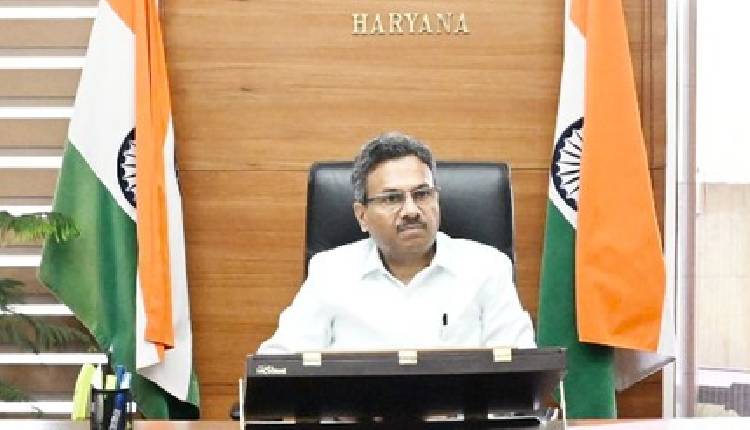
Chandigarh: The Haryana government will set up 23 additional air quality monitoring stations in the National Capital Region (NCR), increasing the total to 52 by July.
The state will also soon introduce an aggregator policy to regulate transport services, while legacy solid waste is targeted for complete elimination within 11 months. This information came to light at a comprehensive review meeting on air quality management in the NCR, chaired by Chief Secretary Anurag Rastogi here.
The Chief Secretary directed all departments to strictly adhere to timelines, stressing that sustained coordination across sectors is essential for long-term improvement in air quality.
Rastogi directed Commissioners of Municipal Corporations in the NCR areas, as well as the Gurugram, Faridabad and Sonipat Metropolitan Development Authorities, to identify key roads — at least five in each jurisdiction — for development or redevelopment as model dust-free stretches.
He asked them to prepare comprehensive plans with clear timelines for all milestones, from detailed project report (DPR) preparation to final completion for this year. He emphasised that emissions from transport, construction and demolition activities, and industries must be tackled through precise planning and time-bound action on the ground.
Additional Chief Secretary (Environment) Sudhir Raj Pal stressed the need for checking vehicular pollution across the region. He said enforcement of pollution norms must be strengthened and checking drives intensified, particularly on heavily trafficked corridors, to identify and penalise grossly polluting vehicles.
Pal also highlighted the need to adopt cutting-edge technology to monitor emissions from moving vehicles and issue challans accordingly.
Chief Secretary Rastogi directed the Transport Department to collate data from Pollution Under Control (PUC) centres, including the number of cases where certificates were refused and instances where vehicles exceeded prescribed emission norms.
Principal Secretary (Transport) Raja Shekhar Vundru said the department would soon introduce an aggregator policy to regulate cab and ride-sharing services in the state.
The policy aims to bring a large fleet of privately operated vehicles under a structured regulatory framework, ensuring compliance with emission standards and contributing to the reduction of transport-related pollution.
He said that in compliance with directions of the Commission for Air Quality Management, diesel auto-rickshaws have nearly been phased out from major NCR districts as per timelines. In the remaining NCR areas, they will be phased out by December 31.
He also briefed the meeting on the Naya Safar Yojana, under which nearly 1.9 lakh old trucks and 16,000 buses will be phased out and replaced with cleaner BS-VI, CNG and electric vehicles through financial incentives.
(IANS)