

New Delhi: India’s space economy is projected to grow five-fold from the current $8 billion to $40-45 billion over the next decade, driven by policy reforms, rising private sector participation and growing commercialisation of space technologies, an official fact-sheet said on Sunday.
The fact-sheet highlighted that India currently accounts for about 2-3 per cent of the global space economy, with the country’s share targeted to rise to 8 per cent by 2030.
The rapid growth is being supported by a series of structural reforms undertaken in recent years, including the opening up of the space sector to private players, the establishment of the Indian National Space Promotion and Authorisation Centre (IN-SPACe), and the creation of NewSpace India Limited (NSIL) to commercialise technologies developed by the Indian Space Research Organisation (ISRO).
According to the government, India has witnessed a sharp rise in private participation in the space sector.
From having just one registered space startup in 2014, the country now has more than 400 space startups as of February 2026.
In addition, investment in Indian space startups has crossed $500 million, with nearly $150 million attracted in 2025 alone.
The government has introduced several measures to encourage investment and innovation, including liberalised foreign direct investment norms, a Rs 1,000 crore venture capital fund, a Rs 500 crore technology adoption fund and startup support schemes.
Moreover, commercial activity in the sector has gathered momentum. NSIL’s revenues rose from Rs 321.77 crore in FY22 to Rs 3,246.09 crore in FY25, reflecting growing demand for Indian space technologies and services.
The government has highlighted India’s expanding global footprint in space, noting that the country has launched 399 foreign satellites since 2014 and signed more than 300 space cooperation agreements with 61 countries and five multilateral organisations.
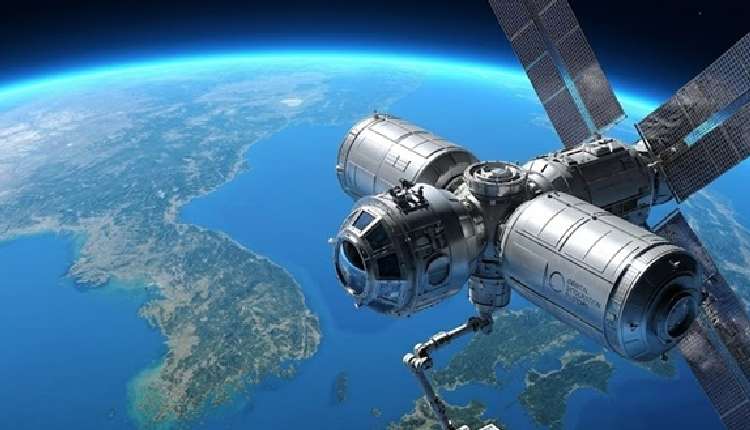
India’s space ambitions are being backed by a robust pipeline of missions, including the Gaganyaan human spaceflight programme, the Bharatiya Antariksh Station, the Venus Orbiter Mission and future lunar exploration projects.
India’s space programme is evolving from a scientific endeavour into a major engine of economic growth, innovation and technological self-reliance, while strengthening the country’s position among the world’s leading spacefaring nations, according to the factsheet.
(IANS)