
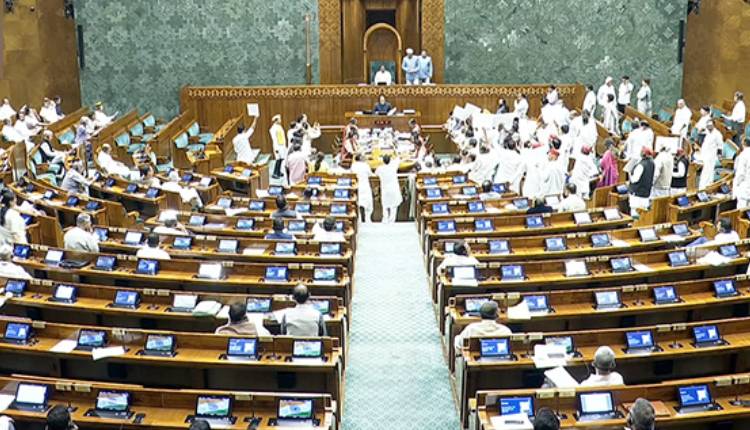
New Delhi: The Appropriation (No. 3) Bill, 2026, which seeks to authorise expenditure from the Consolidated Fund of India towards excess spending incurred during the financial year ended on March 31, 2023, was passed in the Lok Sabha on Tuesday by a voice vote, amid protests from the Opposition.
Amid the chaos, Finance Minister Nirmala Sitharaman introduced the Taxation and Other Laws (Amendment) Bill in the House for consideration.
The Bill seeks to amend the Payment and Settlement Systems Act, 2007, the Income-tax Act, 2025, and the Finance Act, 2026.
The Lok Sabha was adjourned for the day on Tuesday, amid persistent protests and an ongoing deadlock over opposition-led issues. Proceedings were disrupted multiple times due to opposition sloganeering and protests before the Lower House was adjourned. It will reconvene on Wednesday at 11 am.
There were multiple adjournments in both the Houses of Parliament amid noisy protests by the Opposition over various issues on Tuesday. Opposition MPs staged protests at the Parliament premises over multiple issues, including the embezzlement of Ram Mandir donations, police action on protesters during the Parliament March on July 20 in the national capital, and the Cauvery water dispute.
A day earlier, on Monday, the Lok Sabha passed a Bill to increase the sanctioned strength of judges in the Supreme Court without any discussion amid persistent protests by Opposition members.
Meanwhile, the BJP on Tuesday accused the opposition of repeatedly disrupting Parliament proceedings and preventing the House from functioning during the ongoing Monsoon Session.
The remarks came amid continued disruptions in the Monsoon Session over the NEET paper leak controversy and the police action against protesters at Jantar Mantar on July 20. Opposition parties have been demanding a response from the Union Home Minister over the alleged “firing” on the protesters.
The BJP accused the Congress and its allies of deliberately obstructing parliamentary business, depriving elected representatives of the opportunity to raise public issues and discuss important legislation.
(IANS)