‘Shocks The Very Conscience’: SC Slams Probes Into 2012 Rape-Murder Of Karnataka Teenager, Orders New Investigation

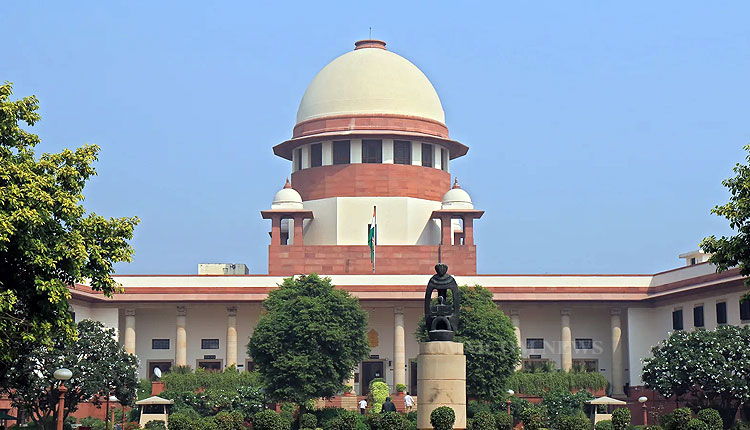
New Delhi: The Supreme Court on Monday ordered a de novo investigation into the 2012 rape and murder of a 17-year-old girl in Karnataka, observing that the manner in which various investigating agencies handled the case “shocks the very conscience of the court”.
A bench of Justices Sanjay Kumar and Sanjeev Sachdeva set aside the Karnataka High Court’s August 30, 2024 order dismissing the plea seeking reinvestigation and directed the state government to constitute a Special Investigation Team (SIT) headed by a senior police officer.
The apex court directed that the SIT comprise efficient investigators conversant with modern investigative technology and specifically barred officers who had been part of the earlier investigations by the Belthangady police, Karnataka CID, or the CBI from being associated with the fresh probe.
The top court said the victim, a second-year pre-university student, was brutally raped and murdered in October 2012, while the person prosecuted for the crime, Santhosh Rao, was subsequently acquitted by the Sessions Court in 2023 for want of evidence connecting him with the offence.
“The person who was prosecuted was held to be incapable of committing the offence. Clearly the investigation has been conducted in a manner that causes injustice to the victim,” the Justice Sanjay Kumar-led Bench said. It further observed that “the possibility of the real culprit(s) manipulating the investigation cannot be ruled out” and said that such “lax and improper investigation gives premium to the Investigating Officers who failed to do their job correctly and diligently”.
The Supreme Court recorded that the victim’s father had consistently claimed that Santhosh Rao was innocent and had raised suspicion against three other persons.
The case was initially investigated by the Belthangady police, later transferred to the Karnataka CID, and subsequently handed over to the CBI in 2013 following public outcry. However, the CBI filed a charge sheet against Santhosh Rao, concurring with the earlier investigations and giving a clean chit to the three persons suspected by the victim’s family.
The Sessions Court acquitted Rao on June 16, 2023, holding that there was no evidence connecting him with the crime and that the prosecution had failed to prove the charges.
In its judgment, the Supreme Court found several investigative lapses, including failure to secure CCTV footage, non-recovery of the victim’s umbrella, slippers and inner garments, and improper preservation of the vaginal swab, which rendered it unfit for DNA analysis.
The apex court also observed that hair belonging to persons other than Rao had been found on a piece of the victim’s clothing. It referred to the evidence of the DNA expert that if suspected persons were identified, their blood samples could still be collected and compared with the hair found on the material.
“Material witnesses are available and the hair of other persons found and produced as Material Object No. 15 available and if suspected persons found, their blood sample could be collected and on its DNA examination, comparison can be made,” the top court said.
The Justice Sanjay Kumar-led Bench observed that the state government had, pursuant to an earlier order of the Supreme Court, located eight potential witnesses within three weeks and provided them protection. “This raises questions on the inability of 3 investigative agencies to examine these leads when it was timely,” it said.
The Supreme Court reiterated that constitutional courts can direct a fresh or de novo investigation in exceptional circumstances where the investigation has not been conducted in a proper and objective manner. It relied on its earlier judgments holding that fair investigation is part of the constitutional guarantee under Article 21 and that courts can intervene where non-interference may result in failure of justice.
In the present case, the bench said: “Injustice to a person who was falsely charged can always be compensated, however injustice to the victim who was brutally raped and then murdered can never be compensated.”
“Society would be failing in its duty if it does not provide justice to the victim of such a heinous crime by conducting a proper investigation and bringing the real culprits to book,” it added.
The Supreme Court directed that the fresh investigation be completed within three months and the police report filed before the competent court in accordance with law. At the same time, the top court clarified that Santhosh Rao, having already been tried and acquitted, is protected under Article 20(2) of the Constitution and Section 300 of the CrPC from being tried or prosecuted a second time and shall not be subjected to further investigation or prosecution.
The apex court also made it clear that its observations should not be construed as expressing even a prima facie opinion on the role of any individual, including Mallik Jain, Deeraj Jain and Uday Jain, and directed the SIT to conduct the investigation independently and without being influenced by the observations on the merits of the case.
(IANS)