TVK Govt’s First 100 Days: Welfare Push, Investment Gains And Mounting Challenges


Chennai: The TVK government led by C. Joseph Vijay completes 100 days in office on Monday, marking a political shift in Tamil Nadu after more than five decades of alternating rule by the DMK and the AIADMK.
TVK, a young political party, won the Assembly election in April and formed the government on May 10. Vijay took the oath with nine ministers.
The Cabinet was expanded with 23 ministers on May 21 and two more the following day. Immediately after assuming office, Vijay signed three key files. These provided 200 free units of electricity every two months to domestic consumers using up to 500 units, proposed a Singappen Special Task Force for women’s safety and established 65 anti-narcotics units.
The government closed 717 TASMAC liquor outlets near educational institutions and places of worship. It raised the dearness allowance for government employees from 58 to 60 per cent, ordered the renovation of Amma canteens and announced the waiver of crop loans of up to Rs 50,000 for marginal farmers.
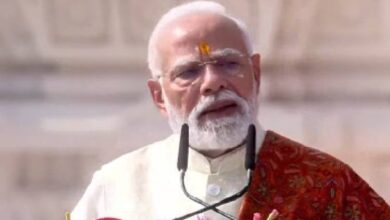
During his visit to New Delhi on May 27, CM Vijay met Prime Minister Narendra Modi and submitted demands concerning the Mekedatu dam dispute and the problems faced by Tamil Nadu fishermen. On June 9, he launched the Singappen force and later announced a gold-ring scheme for babies born in government hospitals.
The revised Budget unveiled several welfare measures, including eight-gram gold coins and silk clothing for brides, 70,000 concrete houses to replace huts, modern bicycles for Class 11 students and laptops for government college students.
State Finance Minister Maria Wilson said 125 election promises had been incorporated into the Budget.
For the TVK government, Industry has emerged as a major focus. The government says 104 agreements have attracted investments exceeding Rs 1 lakh crore during its first 100 days.
At the Vetri Tamil Nadu Investors’ Conclave alone, 97 agreements worth Rs 67,452 crore were signed, with the potential to create 1.07 lakh jobs across 23 districts.
However, the administration faces opposition criticism over law and order, sexual offences, power disruptions and poor waste management.
Its inexperienced ministers have also had to counter DMK and AIADMK legislators in the Assembly.
Despite these challenges, the government has projected an image of administrative urgency, welfare expansion and vigilance against corruption. Its early record appears promising, but implementation of its announcements and investments will determine whether the first 100 days become the foundation for lasting change.
(IANS)